



All around Europe the defence spending scale-up is generating anxiety among some policymakers, and in the climate community, who worry that there is no longer enough fiscal space to fund climate and defence at the scale each requires.
That partial reading assumes defence, climate and economic renewal draw on entirely separate, rival industrial bases. But the supply chains do not support the assumption.
From competition to convergence
Advanced manufacturing, critical minerals processing, grid technology, battery and storage technology: each is a prerequisite for achieving more than one strategic priority at once. Increasingly, the same companies and knowledge underpin defence-industrial capacity, the energy transition, and any reindustrialisation agenda capable of reducing Europe’s exposure to the fallout of US-China competition.
Europe’s biggest challenges no longer fit neatly into separate policy boxes. Nor do the firms that now can deliver on them.
Loom’s recent Dependence report examined the case of rare earth magnets and batteries. Both are critical components in modern warfare as it becomes more autonomous and more electric; advanced weapons systems, drones in particular, need each of them. Renewable energy systems need the same inputs, from similar processing chains, in many cases from the same suppliers.
Debates about green growth and security increasingly turn on who controls these critical materials and technologies. Following years of energy shocks and trade disruptions, and fears over hybrid attacks on infrastructure like energy supplies, our new polling shows sovereign control has become a higher public and political priority.
European states will remain interdependent and trade with international partners and cannot simply turn inwards. But the vulnerability that recent years have revealed sits in the materials and technologies on which security, economic strength and environmental resilience all depend at once. Many of these technologies are no longer clearly civilian or military, but serve more than one purpose.
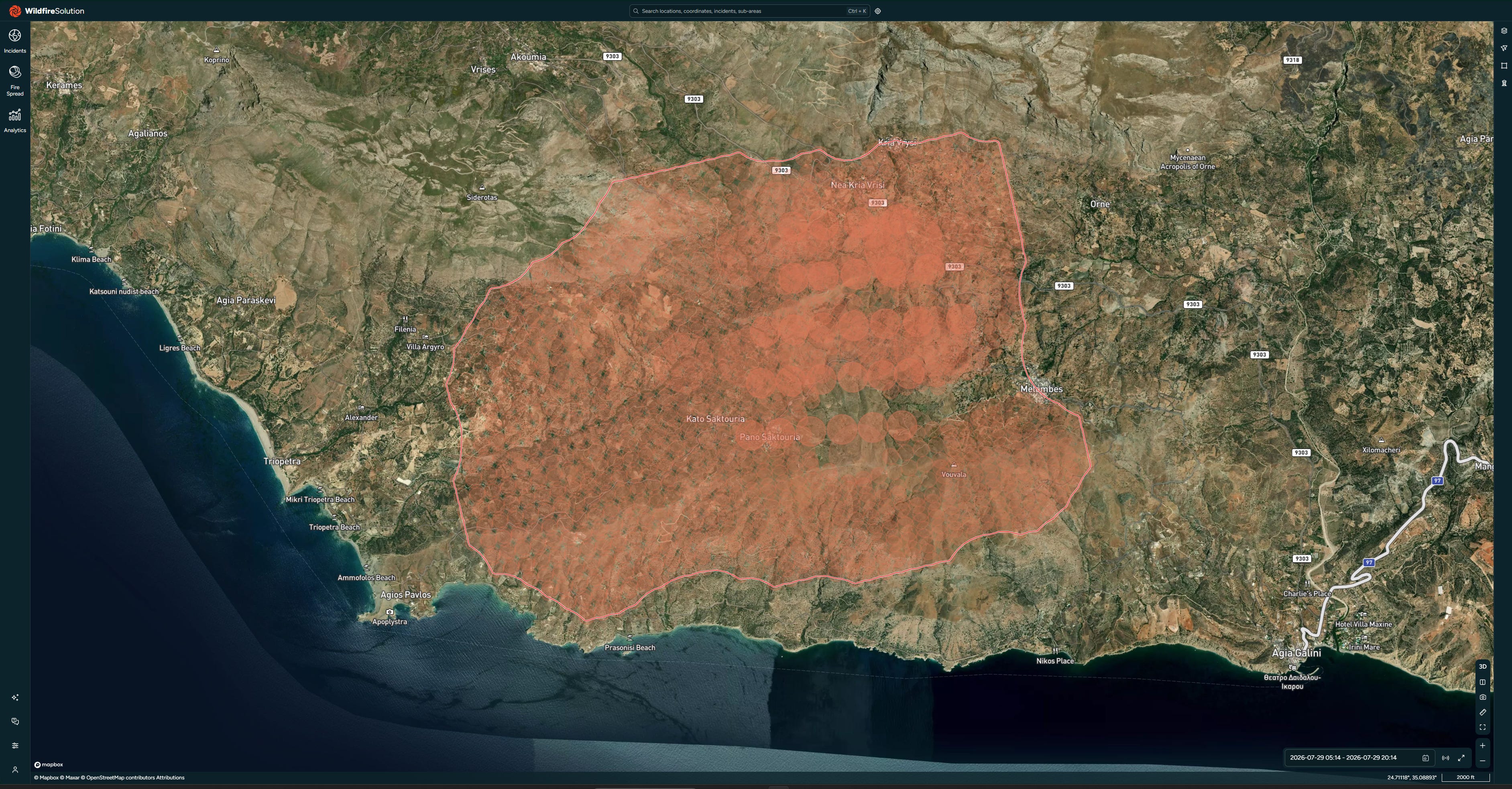
A lithium battery can support grid balancing and a forward operating base. ICEYE in Finland supplies synthetic-aperture-radar imagery for flood response but also defence intelligence. OroraTech operates thermal satellites used for national wildfire detection and tracking in Greece, but is also part of a German space-based reconnaissance initiative for defence and security. Tekever in Portugal builds maritime surveillance systems that Portuguese authorities use against drug trafficking and illegal fishing from the same platform, so one procurement serves both a policing mission and an environmental one at the same time. Spanish firm Voltrac is developing autonomous electric vehicles for agriculture and frontline logistics, the same platform addressing labour shortages on farms and keeping people out of dangerous military logistics operations.
Battery materials, grid technology, satellite intelligence, cyber defence, wildfire detection, and deployable power could become the shared backbone of national defence, energy and industrial strategies, with scarce fiscal resources doing several jobs at once.
Italy’s Giorgia Meloni has been among the more direct on this point, saying the new NATO spending push in Europe should look at “operability, essential services, energy infrastructures, supply chains: all things that are not simply done with weapons… There is no defence without this approach.”
The money is already moving
Capital is already being redirected. Germany’s draft 2027 federal budget allocates €109.7bn to the defence ministry out of €555.4bn in core federal expenditure, close to one in every five euros; Emmanuel Macron has brought the doubling of the French defence budget forward from 2030 to 2027; and Poland’s 2026 budget sets defence spending at 4.8% of GDP, against the 5% NATO members have agreed to reach by 2035. Crucially, the target itself reflects a broader definition of security: at least 3.5% is for core defence requirements, while up to 1.5% can support critical infrastructure, network defence, civil preparedness and resilience, innovation, and the defence industrial base.
British Prime Minister Andy Burnham entered office in July saying that reindustrialisation through defence would be a personal priority. “It is right that we rebuild our hard power for a new era that is very different to the one in which much of our current military equipment was first designed,” he wrote. “We will do this by boosting our sovereign capabilities in areas where we already have incredible strengths and in the tech of the future.”
Beneath the headline defence numbers, the mandates of public finance institutions previously focused on clean energy expansion are being quietly widened to cover defence. The European Investment Bank, which has described itself for years as Europe’s climate bank, quadrupled its defence and security financing in 2025, reaching over €4bn. The UK’s National Wealth Fund received an expanded mandate in March 2025, now covering dual-use technologies and defence supply-chain resilience. The European Innovation Council opened its 2026 work programme to defence and dual-use technologies in June 2026, including a €100m defence scale-up call. Denmark’s EIFO now lists national security as a named strategic priority alongside climate.
Private capital markets are moving too. The UK’s Financial Conduct Authority and the European Commission have both recently issued guidance making clear to investors that sustainability rules do not block investment in defence. The intention is to steer finance previously focused on climate towards a wider set of priorities.
The framing of strategy in this area also determines who turns up. Public support for rearmament in Europe is fragile, giving governments and industry an interest in showing wider societal benefits. An integrated industrial strategy can draw in defence ministries, procurement bodies, manufacturers, regional development authorities and workers who could benefit, assembling a broader coalition than an environmental programme built only around emissions targets or a defence programme built only around preparing for conflict.
What Ukraine showed
Defence has anchored energy innovation before. The first real market for solar cells was the space and defence programmes of the 1950s and 1960s. The CIA reportedly developed lithium-iodine batteries in the 1960s to overcome the short lifespan and unreliability of existing power sources for covert surveillance equipment and reconnaissance satellites.
Ukraine’s experience shows the traffic runs the other way too. Its defence and its civil resilience have drawn on clean tech alongside conventional supply, and their story shows resilience technologies are not only those helping societies withstand crises, but those helping them recover faster afterward.
With more than half of the country’s traditional power generation capacity damaged or destroyed, Ukraine shifted from Soviet-era central plant to small, localised renewable units. Ember recently drew on this experience to document how quickly these energy sources can recover power supplies relative to the alternatives. Hospitals, water utilities and municipal buildings integrated rooftop solar paired with local battery storage and microgrids to form independent energy islands able to function through total blackouts. Ukraine’s telecoms network Kyivstar says it now uses roughly 261,000 batteries and around 10,000 generators, allowing its base stations to operate for up to ten hours without grid power.
Ukraine is also using UAVs equipped with magnetometers to detect buried metallic objects while keeping people out of danger, and is testing robotics, AI and digital platforms for humanitarian mine clearance. The war disrupted not only farming but the ability to know what was actually being planted and harvested. Researchers have consequently used satellite remote sensing to estimate winter crop areas and support agricultural statistics when conventional field surveys are too difficult or dangerous. Europe could need the same capability after floods, fires, or other disruptions.
Harry Krejsa, director of studies at the Carnegie Mellon Institute for Strategy and Technology who was previously responsible for the White House National Cybersecurity Strategy, wrote with his former White House colleague Phoebe Benich that stripping down any battlefield-transforming tool reveals “electrotech”: hardware and software that turn electricity from a physical flow into something that can be digitally generated, stored and directed. Drones are miniature electric cars. Electric vehicles are already smartphones on wheels. AI and offensive cyber consume electricity at scale, and the same batteries and power electronics are becoming critical to the grid those models depend on. A small technology stack now sits at the centre of home front and battlefield alike.
“Today, the same battery cells, motors, and code that turn a Rivian’s wheels also turn a Ukrainian assault bot’s tank treads,” they write. “And as in the 1940s, that reserve can only serve military needs if built at civilian scale. Detroit became the Arsenal of Democracy only after selling generations of cars to families first: Consumer markets for electric vehicles, grid storage, or even laundry-folding robots will dwarf any Pentagon acquisition and will be the necessary ingredient for any successful effort at diversifying away from China.”
The same logic appears in Berlin’s current debates. The German defence leader and Loom global advisor Nico Lange describes the pattern: “If a defence startup in Germany wants to build a new type of drone, a new type of missile, they don’t go to an old defence company, they go to a car maker or an automotive supplier that is very good in producing composite materials in very high quality, for a good price, in very high quantities.”
Enter Loom100
That is the context for the index Loom is publishing today.
Directing support towards dual-use capabilities requires first identifying which technologies, and which European firms, carry strategic weight across more than one domain.
With independent advice from former leaders in defence ministries, Loom’s Senior Fellow and defence tech expert Sylvia Stojilkovic screened more than 500 European pre-IPO deep tech companies to build a capability index. We applied a dual-use lens in the broad strategic sense: a company qualified when its capability does more than one strategic job at once, with credible applications across civilian or industrial markets and defence, security or societal resilience.
Firms needed to be scalable, ready and viable, and capable of contributing measurable impact to societal resilience. The companies are grouped by the value they contribute across four strategic priority areas: Protect, Produce, Power and Prepare. (Read more about our methodology here.)
Our selection was based exclusively on our editorial judgement drawing on publicly available information and the criteria of interest to us: strategic relevance, technological capability, external validation, scalability and readiness, and contribution to allied resilience. The Loom100 is a snapshot, reflecting public information available as of 15 July 2026.
The overlap between defence, energy and economic priorities is already here. Europe has more strategic capabilities than many realise. Eighty-four of the Loom100 companies are primarily outside AI and software, spanning hardware, materials, energy systems, manufacturing technologies and physical infrastructure. (In the coming weeks we’ll profile a number of these companies on our social channels.)
Defence investment can carry a wider societal resilience dividend but it will not happen automatically: it depends on governments identifying cross-cutting strategic priorities and weighing civilian and economic benefits when they design programmes and buy technology. The capability exists in Europe and external validation is visible, but the pathway from validation to industrial scale is weak and this is a common pattern across the four areas we looked at. Procurement systems and siloed agencies in national governments, and in Brussels, have not caught up with the technologies they are being asked to buy. They do not readily accommodate firms whose product is a sensing layer, a materials process or a power system, and which serve both civil and military customers from one production line. Nor do the firms themselves always recognise or communicate that value across sectors. Nor do they effectively use defence procurement to pull investment into other domestic industries, as Canada is doing. That’s why even as Europe’s defence ministries struggle to access a reliable supply of secure batteries, Europe’s nascent sovereign battery industry is contracting. (We’ll publish more on the challenges facing Europe’s sovereign battery companies soon.)

Most Loom100 capabilities are physical, which makes scale an industrial policy question. These are not software firms that scale on a laptop. They need factories, test facilities, certification pathways, grid connections and offtake agreements. Ukraine’s experience of scaling drone production is instructive on the pace that is possible. My colleague Oleksiy Tatarenko explains, in a post for the NEIS Center (who also supported this research project): “Current Western procurement systems are slow and inefficient, as it takes years to organise and execute procurement processes. Ukraine’s procurement and innovation iteration cycles are currently measured in weeks and months.”
Europe’s strategic capabilities are concentrated around established technology and procurement hubs. The UK, Germany and France account for 52 of the 100 companies, with the remaining 48 spread across 18 countries. These concentrations can accelerate investment, talent, testing and production, but they also show how unevenly Europe’s capabilities are distributed.
European countries finance innovation but struggle to finance industrial scale. The Global Deep Tech Report 2026 finds that Europe accounts for 45% of global deep-tech startups but captures 17% of global deep-tech funding, measured across companies founded between 2015 and 2024.
Although Europe should have an advantage in its ability to shape markets through regulation, standards and certification, this is strongest when it is backed-up by productive capacity. Standards can create demand and set expectations around security and resilience, but they cannot substitute for factories, supply chains, public buyers, offtake agreements and growth balance sheets. The clearest remaining gap in Europe’s toolkit is growth-stage capital able to anchor large strategic rounds and carry companies through industrialisation. An industrial policy capable of closing that gap would do four things at once:
• create demand for strategic technologies made domestically or in Europe;
• reward domestic value creation and supply-chain control;
• strengthen domestic markets and production capacity;
• reduce exposure to disruption and economic coercion.
Foreign capital can scale a company but can also move control of it. The absence of European capacity to anchor these firms at the point where they industrialise is what converts investment into a transfer of control. Lakestar, Walden Catalyst and Dealroom find that American buyers accounted for $23bn, or 73%, of disclosed European deep-tech acquisition value between 2019 and 2025.
Strategic capabilities do not disappear when European states fail to scale them. They scale somewhere else, and production capacity, intellectual property and priority customer relationships anchor there too. That transfer reduces the economic and security leverage available to the European nations where the firms incubated. As Lange put it: “Geopolitical power is very much defined by technological leadership, high quantities, and steady supply.”
He draws a wider conclusion:
“I am learning that not only classic protect technologies, security technologies are important for shaping the geopolitical reality, but energy technologies, resilient technologies for environmental production, but also food production, agricultural technologies. They all play a role in projecting power in the future and being not only sustainable, but also successful.”
The question the next few years of investment will answer, as the mandates shift and the money moves, is whether the companies in Loom100 scale in Europe, under national control, or become someone else’s industrial base and someone else’s strategic asset.