


In the weeks after Russia’s invasion of Ukraine, I was among those who believed Europe was on the cusp of a clean energy boom.
The logic seemed ironclad. By weaponising gas and driving fossil fuel prices to extreme heights, Putin had transformed the energy transition from an environmental imperative into an urgent security and affordability one. European governments promised a swift, structural pivot.
It is not going well.
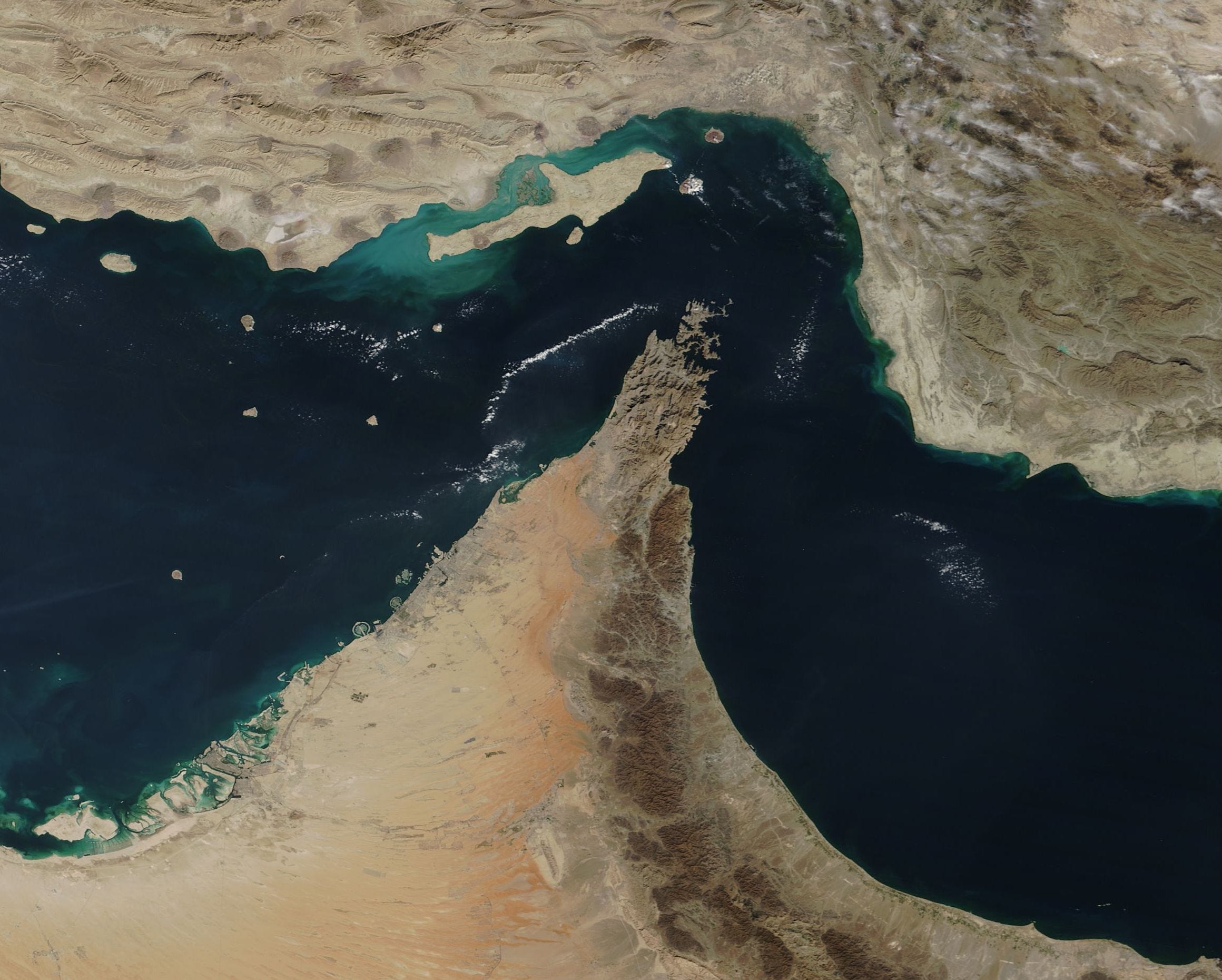
Oil has crossed $100 a barrel for the first time since Ukraine. Qatar, Kuwait and Bahrain have all declared force majeure on energy exports. Aramco’s largest refinery has halted operations. The Strait of Hormuz — through which a fifth of the world’s oil transits — is effectively closed. European gas storage sits below a critically low 30% of seasonal capacity.
This is a stress test of the entire strategic framework Europe has been building since 2022 — and it is exposing the same structural vulnerabilities that the Ukraine crisis revealed. Households and businesses now face another round of bill rises, not just for energy but for food and other crucial supplies too.
More sovereign energy is the right goal. But achieving it requires a different strategy — one that reckons honestly with recent setbacks, and gets serious about the gap between the stated ambitions and targets, and the outcomes people can see for themselves in the real world.
Although Europe’s current exposure is a legacy of decades of oil and gas import dependency, many practical and political barriers to the transition have actually hardened.
It’s a key reason why the old climate consensus, built around siloed technocratic carbon targets, is now unravelling rather than strengthening.
Burning billions, ignoring structural fixes
After the invasion, facing industrial collapse and a household cost-of-living crisis, European governments spent €800 billion helping people pay their gas bills. This vast fiscal shield was a short-term necessity. But in most European countries this was not coupled with sufficient political focus and investment in reducing dependencies or with the policy changes in areas like planning that could make electricity cheaper and more abundant, more quickly.
The money flowed back to the oil and gas industry, which pocketed nearly half a trillion dollars in profits, expanded its political influence, and doubled down on the business that generated their windfall. Government coffers were drained — less money for public services, and crucially, less fiscal room for the new energy infrastructure like grids and batteries that would have actually reduced people’s exposure to price shocks and made economies more competitive.
An emphasis on procuring the cheapest sources of clean energy supply in the short-term has also been prioritised over harnessing the full potential of transition industries at home. These have often been surrendered to China even in areas where European firms are still competing like in auto and wind technologies.
Although falling costs of clean energy technologies have helped to enable record levels of deployment in recent years, interest rates have still proven a huge obstacle to reaching the levels actually needed. To fight inflation triggered by high energy prices, central banks hiked them sharply — and this hurt clean energy far more than fossil fuels. Wind and solar are front-loaded investments; when borrowing became expensive, project economics deteriorated fast. The cost of building a new wind farm spiked 20–30% in two years. Major North Sea offshore wind projects were cancelled outright.
Governments did not have the industrial strategies or financing mechanisms robust enough to defend sovereign energy projects from these macroeconomic shocks or to capture the economic opportunities for their own people.
The fiscal drain has also widened the gap between elites and voters. The public remains supportive of homegrown clean energy — they understand instinctively what is at stake. But polls show they are losing faith in the method. Bills are still elevated. European dependence on Russian gas remains stubbornly high. The promised structural fixes have not materialised quickly enough.
Now the ability of European governments to introduce a new shield for billpayers, or to invest as much public money into new energy infrastructure, could be even more limited than it was before. This will make strategic deployment of defence budgets more important. Canada is already showing a way to do this — using a $60 billion submarine contract to compel foreign bidders to build clean steel mills, EV battery plants, and critical mineral facilities on Canadian soil as the price of access. European governments preparing to spend record sums on defence have the same leverage. They should use it.
Russia: still the ghost in the machine
After Ukraine, Europe traded Russian pipeline gas for American LNG, replacing one dependency with another. The US now supplies over 50% of Europe’s liquefied natural gas — and with Hormuz choked, that supply is now also under threat.
Despite EU commitments to phase-out Russian gas, some governments on the continent are already tempted by an uncomfortable truth: in the short term, a tap that could be turned up is Russia’s. Putin remains a ghost in the machine.
Since the war began, some analysts calculate Europe has already spent more purchasing Russian fossil fuels than it has supporting Ukraine’s military effort. As the April 2026 deadline for banning Russian LNG approaches, pressure for new “pragmatic” exemptions is reaching fever pitch. Norway has predicted yet more Russian gas imports may be permitted.
Putin is mulling out loud just shutting off supplies anyway.
This vulnerability is a result of failing to build sufficient sovereign energy quickly enough. It is understandable that Denmark, like Norway, is looking at whether it can get more from the North Sea, and it was inevitable that the UK’s position on licenses would come back under scrutiny.
Dangers of carbonflation
The taxpayer support used to shield people from high energy costs also quietly undermined one of the key mechanisms of the old climate consensus: carbon taxes.
Having spent hundreds of billions protecting households from elevated gas prices, the idea of letting schemes like the EU Emissions Trading System push prices back up through “carbonflation” is increasingly politically — and economically — untenable. Japan, watching from the outside, is considering restricting its carbon market to credits with direct Japanese industrial involvement, precisely to ensure its approach can strengthen its national economic position.
Italy is leading calls to suspend or overhaul the EU’s scheme ahead of an upcoming review, already reimbursing gas companies using public money to deliver significantly lower electricity prices — regardless of the detrimental impact on homegrown energy investment. In the context of the Iran crisis, Italy might yet secure the support of Germany, and not just Poland and other Eastern nations who have long been critical of the scheme. Britain’s carbon tax is under renewed pressure too. After France’s Gilet Jaunes protests years ago, I wrote for Politico that relying on carbon pricing without a parallel industrial strategy to cushion consumers and drive investment into alternatives simply wouldn’t work. Here we go again.
Political fragility
Taken together, these failures expose critical vulnerabilities that risk being terminal for the political coalition Europe’s transition depends on to survive.
The pattern is consistent. Every crisis that should, in theory, accelerate the transition has instead revealed a new structural weakness: financing mechanisms that buckle under macroeconomic pressure; fiscal capacity drained by short-term shields instead of long-term infrastructure supply; carbon instruments that become politically toxic the moment bills rise; and an import dependency that persists despite years of promises to end it.
This is not an argument against the climate transition. It is an argument that the strategic framework is broken — as every fresh crisis exposes the same dangerous gaps between promises and reality.
A new script
What’s needed is a new set of organising principles. Not new language for the same approach, but a genuine reform — one that speaks directly to national interests, that can survive contact with economic and security shocks, and that builds a political coalition durable enough to outlast them.
Five principles should be at the heart of it.
Economic strength: the transition must build industrial capacity and keep more of the jobs and financial value at home, not drain public finances into fossil fuel profits or offshore supply chains.
Sovereignty: success should be measured by how fast European countries reduce their dangerous levels of dependency on single sources of external supply — be that Russia, the USA, the Middle East or China.
Affordability: cheap, abundant domestic energy must be the political offer, not a promise perpetually deferred while bills are allowed to remain high.
Resilience: financing mechanisms and industrial strategy must be designed to withstand macroeconomic shocks — interest rate spikes, geopolitical ruptures, supply chain seizures — rather than collapse under them.
National security: foreign and defence policy, like industrial strategy, should be joined up with the renewed emphasis on energy sovereignty, not treated as an entirely separate domain.
These are not abstract principles. Each one answers a specific, documented failure in the existing approach. Together they would reshape not just the politics of the transition but its architecture — the instruments, the financing, the institutions, and crucially, the argument made to voters about why this all matters to them.
That these principles pull in different directions is true, but every serious strategic framework contains tensions — that is not a flaw in the design, it is simply a description of honest reality. The question is whether leaders manage these through a coherent set of priorities, or whether they let market shocks, political panic, lobbying of incumbent interests, and legacy positions adopted in a different era, do it for them.
The Iran crisis, like Ukraine before it, is another reminder that our energy dependencies are a brutal strategic liability.
But the old script has run out. It’s time to write a new one.
** Update 12th March:
Is Europe’s next supply disruption from Washington, not Hormuz?
It strikes me that one risk deserves more attention: the possibility that Washington, not Tehran, becomes the next source of disruption to fossil fuel supplies.
On refined oil products, this could be serious and near-term. Trump faces midterm elections in November 2026 and so petrol prices at the pump are a direct political liability. Restricting exports to keep more supply at home — and prices lower for American drivers — follows a simple logic.
Europe’s exposure here is real and has grown fast: imports of American diesel were negligible in 2021, but topped 180,000 barrels a day by 2024 as Russian supply was sanctioned away. Overall US crude exports to Europe now run at nearly 2 million barrels a day.
Natural gas is a different story, at least for now. American gas prices have barely moved while European prices have surged — meaning US voters are not feeling the pain at home, and there is no obvious political reward for cutting exports. In fact, restricting gas shipments to Europe would enrage the US gas industry and contradict Trump’s stated goal of expanding American sales to Europe. The risk is still real but it may belong to a later window: US gas prices are forecast to rise sharply later this decade, and so that could be when Europe’s heavy reliance on American supply could become exposed.
That said, it does not mean the leverage disappears in the meantime. A President willing to use tariffs and troop deployments as bargaining chips may consider they also have an incentive to treat Europe’s gas dependency as a negotiating tool to extract ‘concessions’ on anything from defence spending to trade terms or Ukraine.
The systemic risk of a move like this from Trump should not be underestimated. A decision to restrict US refined product exports into an already supply-constrained global market — with Hormuz closed and storage levels critically low — could trigger a price spiral with consequences well beyond Europe.
That could feed back into American pump prices too, undermining the very political objective it was designed to serve. The US also continues to import significant volumes of crude and refined products itself. An export restriction that tightens global markets would likely raise the cost of those imports simultaneously. Gulf Coast refiners, who have built much of their export business around European demand, would likely face significant revenue losses. The producers who supply them — a core constituency for this administration — would come under pressure too. So it would not be a cost-free move for Trump.
But the broader point stands either way. Energy sovereignty is not just about Russia, and reducing exposure to these kind of risks is just prudent.